Kelp Cutlery
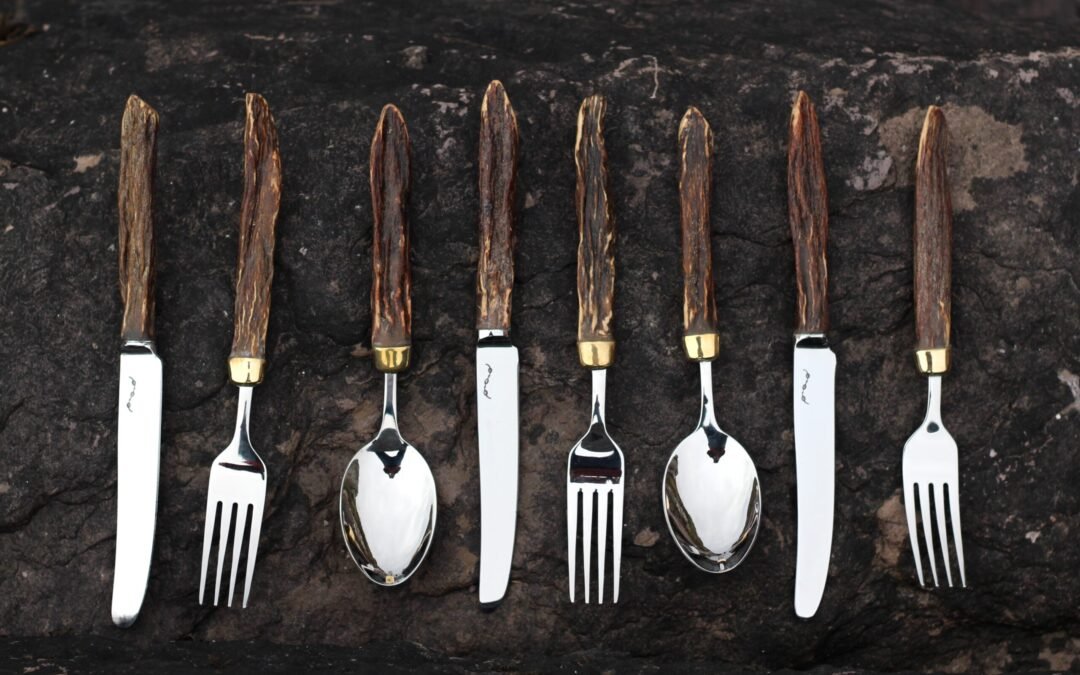
A selection of fine contemporary and vintage cutlery
with handles crafted from Seaweed.
From Storm to Table
-

Where it began.
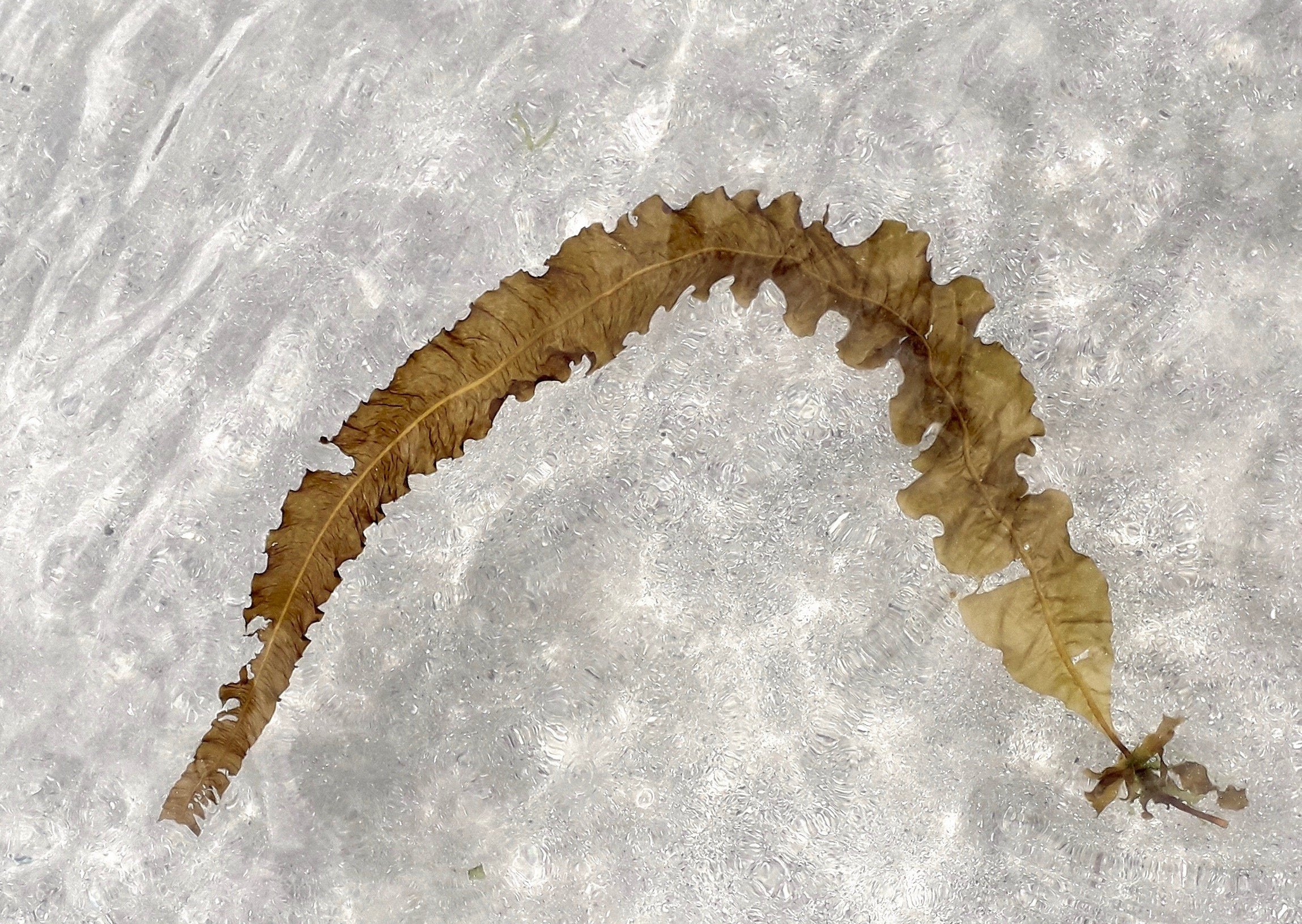
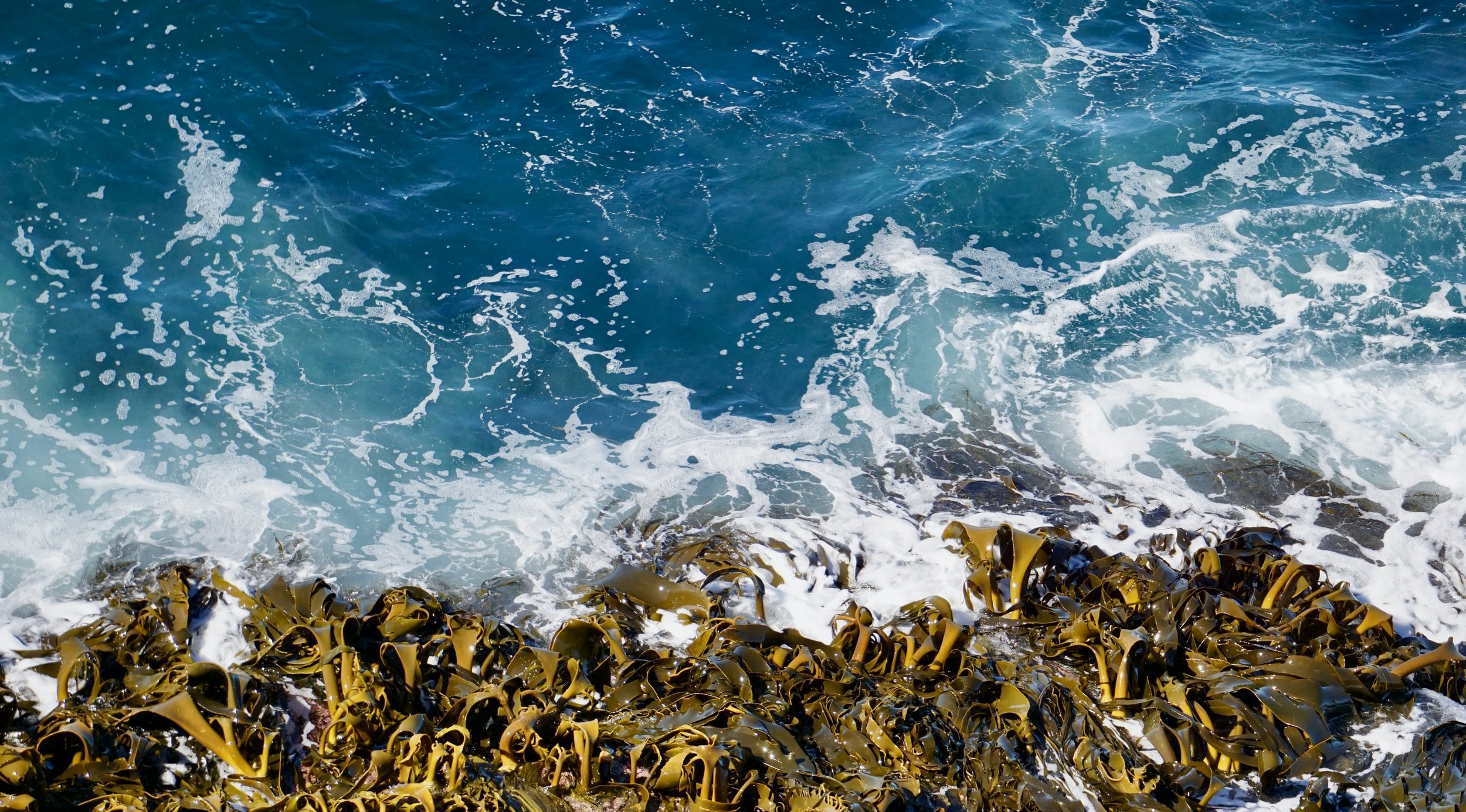
After lots of experimentation we have developed the technology to cure and stabilise the Forest Kelp rods (Laminaria hyperborea), that are washed up on our Skellig coast by the southerly gales. The process which takes a number of months has enabled us to make some spectacular cutlery pieces!
-
How to order
We are constantly working on commissions for our hand made kelp cutlery. It is hard to keep the shop updated. Please whatsApp 087-6551485 to receive images of what we currently have available.
All items priced individually.
These are limited edition pieces. Explore the collection on our store today or get in touch to talk about a commission you would like to make.
-

As Seen In
Our Kelp Cutlery has been commissioned by a number of Michelin star Restaurants including Aimsir** in Kildare and The House* in The Cliff Ardmore, Aniar in Galway and Lignum in Connemara.
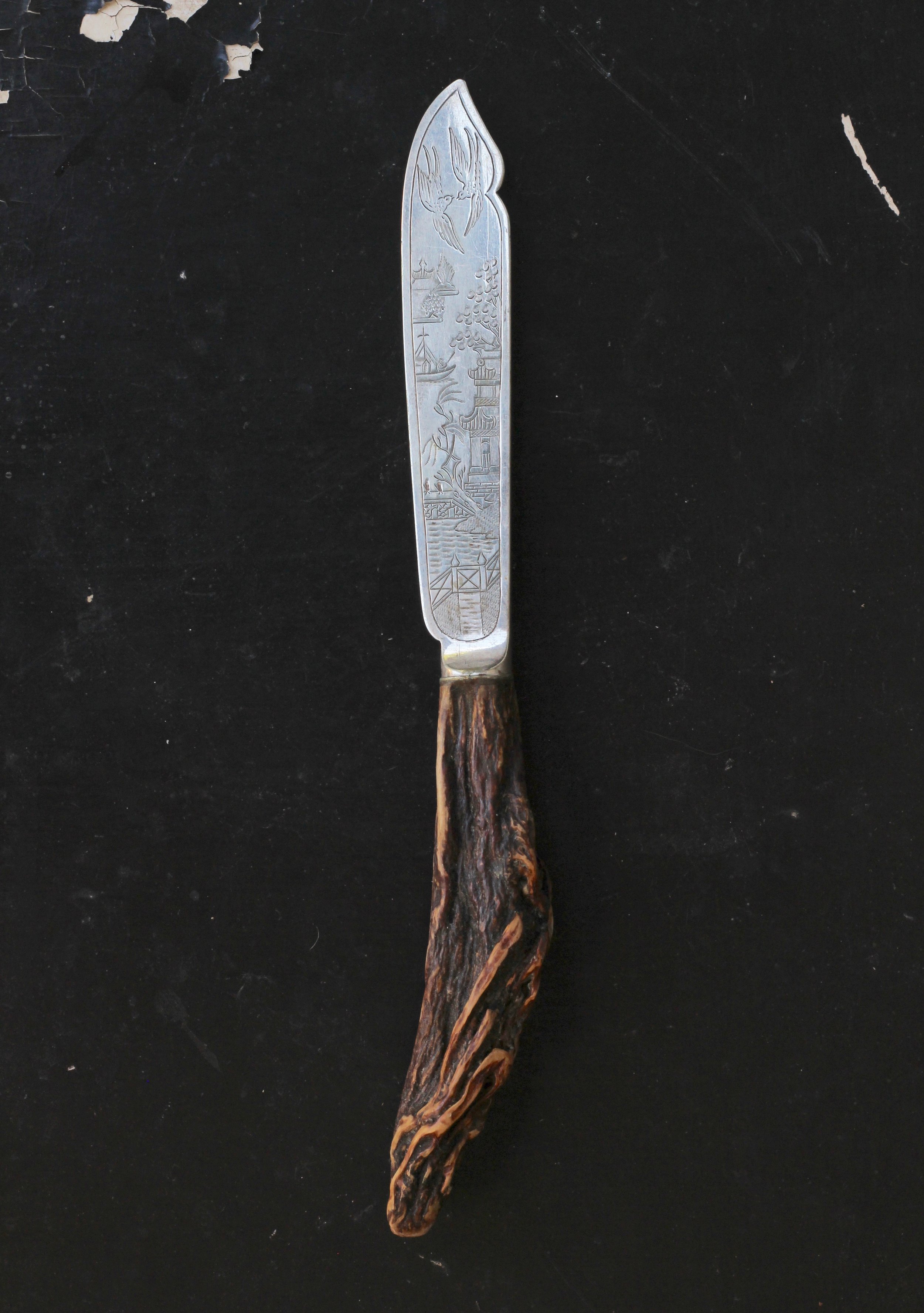
Our Handles
The cutlery handles are sustainably made from stormcast stalks of the Forest kelp Laminaria hyperborea, which wash up on the shore during winter.
These giant canopy seaweeds form huge hidden forests all around the Irish coastline and support a vast amount of life. Fish and shellfish graze on, hide, hunt and live in this vital biodiverse marine ecosystem.
Like all seaweeds, the kelps absorb carbon and release oxygen. Over half our Oxygen comes from marine algae.
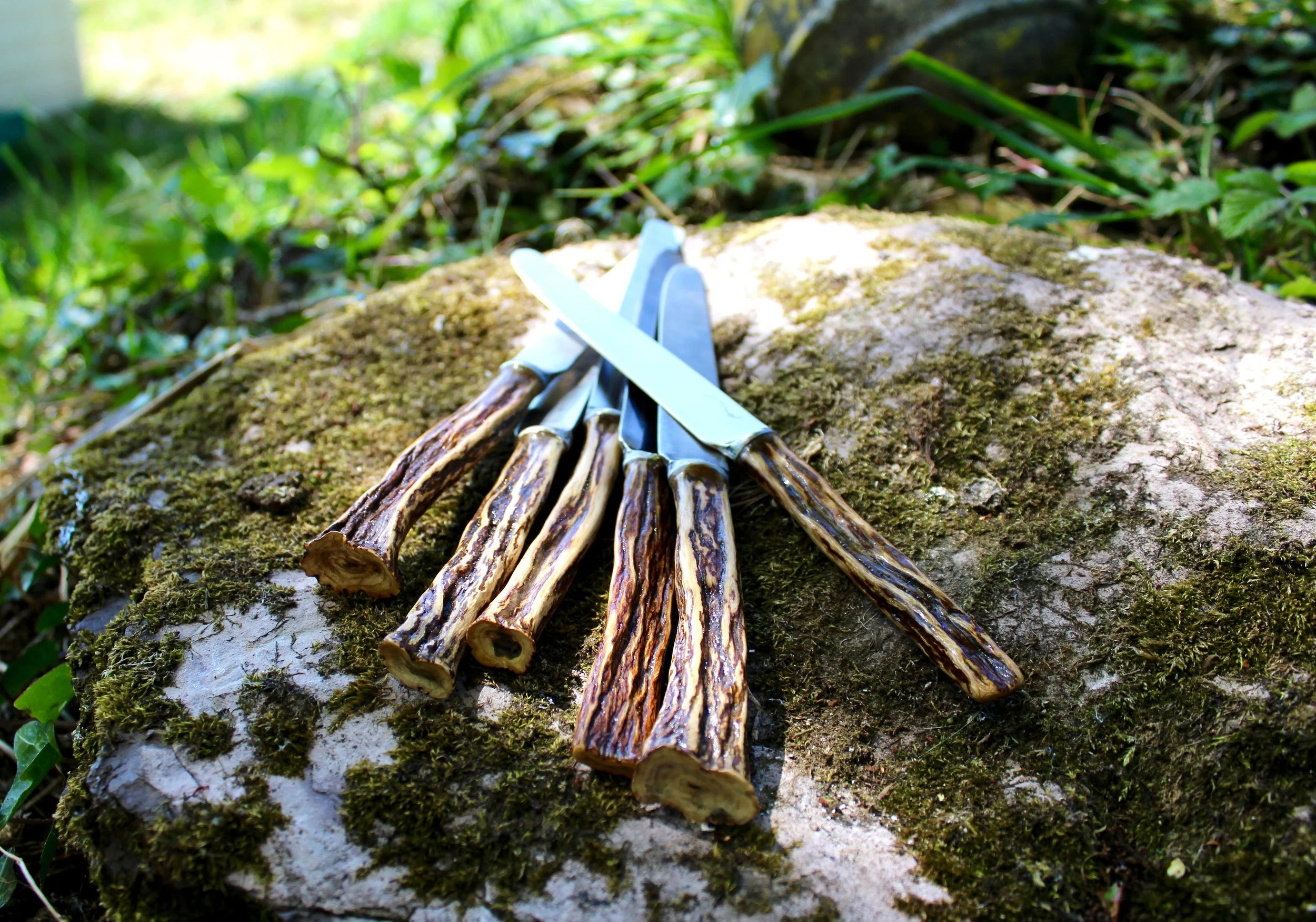
A selection of fine contemporary and vintage cutlery with handles crafted from Seaweed.
-
From our Co. Kerry base at Derrynane on the Skellig Coast we are husband and wife, John Fitzgerald and Kerryann O'Farrell. We have been working with seaweeds and running discovery and tasting workshops since 2009. After extensive trials they have developed a unique process to cure and preserve the kelp stalks, allowing them to fashion their distinctive cutlery range.
-
While researching seaweeds, we stumbled upon an excerpt from 'The Farmers Register, 1839 Devoted to the Improvement of the Practice and Support of the Interests of Agriculture.'
"In Scotland, the stem of this species is used for making handles to pruning knives.............. When these handles have become hard and shrivelled, and have been tipped with metal, they are hardly to be distinguished from hart's horn".
That short paragraph sparked our curiosity and we set about experimenting for ourselves. The rest is history.
-
The handles are made from organic material and are sealed with several coats of Tung oil and a final coat of linseed oil/beeswax over a 2 month period.
• Not suitable for the dishwasher.
Clean Gently: Wash with warm water and a soft brush or sponge to remove debris; avoid harsh detergents.
Dry Completely: Air dry thoroughly to let moisture escape the handle.
Oil Regularly: Apply a few drops of food-grade mineral oil or beeswax with a dry cloth, rubbing it into the Kelp.
Let it Soak: Allow the oil to penetrate for several hours or overnight.
Wipe Excess: Buff off any extra oil with a clean cloth.
Protect: Store in a dry place.
The ferrules are either nickel or brass and can discolour/tarnish if left in a damp area. A light rub with extra fine steel wool or Brasso will restore.
Keep your Kelp Cutlery in a dry area.
-
We deliver our Kelp Cutlery across Ireland, Europe, UK, USA and the rest of the world.